
Considered the beating heart of scientific progress in the American landscape, South Dakota’s Homestake Mine is not just a testament to the historical gold rush but a vital component in the advancement of particle physics. Here, nestled deep beneath the Black Hills, an unprecedented scientific journey began, unraveling the secrets of the elusive neutrino.
Seventy years ago, a fundamental puzzle in the sphere of particle physics captivated the international scientific community. The enigmatic neutrinos, brought into existence hypothetically by Austrian physicist Wolfgang Pauli in 1930, were described as ghostly particles evading detection, carrying away unaccounted energy from beta decay. These illusive particles required groundbreaking techniques to unveil their secrets.
In the 1960s, South Dakota played an instrumental role in this neutrino narrative. Raymond Davis Jr., in a pioneering experiment at the Homestake Mine, took an authentic plunge into the depths of particle physics. Davis and his team installed a colossal detector involving 400,000 liters of perchloroethylene, residing 1.5 kilometers below the surface. The mission? To capture solar neutrinos bombarding the Earth from our brilliant sun.
The experiment was not without challenges or surprises. Instead of affirming theoretical models of neutrino production, Davis found a mere one-third of the expected neutrino count, triggering what is known in scientific circles as the “solar neutrino problem.” The results demanded a profound reconsideration of the existing models of stellar nuclear reactions.

Raymond Davis Jr.
The groundwork laid at Homestake inspired further investigative endeavors. Across oceans in Japan, Masatoshi Koshiba’s Kamiokande facility, enhanced by the Super-Kamiokande, emerged as critical players, validating the neutrino shortfall. These experiments employed vast water tanks to summon glimmers of Cherenkov light — telltale signs of neutrino interaction.
Solving the solar neutrino problem wasn’t solely an academic victory. It unlocked a deeper truth: neutrinos oscillate among three “flavors”—electron, muon, and tau—meaning they morph among these states as they travel, a revelation demanding neutrinos possess finite mass.
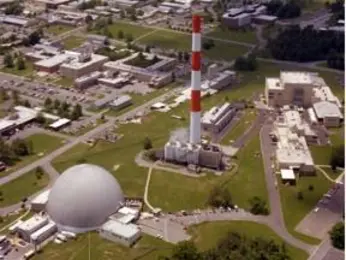
Brookhaven National Laboratory
Collaborative international efforts have since escalated. The IceCube Neutrino Observatory in Antarctica captures neutrinos navigating through the terrestrial bowels, its exploits leading to the creation of a Milky Way map stitched purely from neutrino observations. Probing further into the cosmic veil, KM3NET, stationed on the Mediterranean seabed, detected the pinnacle in cosmic neutrino energy, guiding human inquiry into unknown astronomical phenomena.
The continuous evolution of neutrino research now beckons the gaze towards structures like the Jiangmen Underground Neutrino Observatory in China, claiming measurements of oscillation with unprecedented accuracy. Emerging legends such as Japan’s Hyper-Kamiokande and America’s Deep Underground Neutrino Experiment set the stage for the next decade’s exploration.
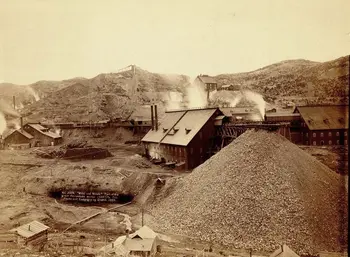
Homestake Mine
Yet, South Dakota remains a beacon, reflecting upon its substantial contributions to the grand tapestry of theoretical and applied physics. The cavernous depths of the Homestake Mine not only narrate tales of mineral wealth but remain a silent witness to humankind’s indefatigable quest for knowledge — a pursuit unearthing the very constitution of our universe.
A convergence of tenacity and curiosity in the South Dakotan expanse has vindicated Wolfgang Pauli’s once whisphered prophecy—these undetectable particles unveil themselves, echoing legacies, inspiring generations, and propelling the continuum of scientific boundaries.
Email inquiries about South Dakota’s scientific legacy can be addressed at info@sodak.science.