
On November 28, 2009, a landmark event took place in the realm of wildlife conservation and ecological restoration, linking the vast grasslands of South Dakota with the prairies of northern Mexico. A semi-trailer departed from the peaceful confines of Wind Cave National Park, South Dakota, carrying a precious cargo of 23 American bison—20 females and 3 males—across international borders to their new home at Rancho El Uno in the Janos Valley, Chihuahua, Mexico.
The choice of Wind Cave National Park, located in the Black Hills of South Dakota, was no accident. This park is home to one of only two bison herds in the United States that remain free of detectable cattle DNA, a purity that is vital for conservation efforts. Furthermore, Wind Cave’s bison are free from brucellosis, a disease prevalent among bison, which can threaten livestock and deter conservation projects. As a result, the Wind Cave herd represented an ideal seed population for restoring bison to regions where they once roamed freely.
The transport of these majestic animals not only reinforced South Dakota’s pivotal role in wildlife preservation but also underscored the importance of maintaining genetic purity in bison populations. Over the decades, crossbreeding had introduced cattle DNA into most bison herds, making the pure lineage from Wind Cave uniquely valuable for reintroduction initiatives.
The Historical Context of Bison in Mexico
The American bison, once a quintessential part of Mexico’s northern landscape, were tragically wiped out during the late nineteenth century due to overhunting and habitat destruction. Their decline mirrored a similar fate across North America. It was not until a small wild herd was observed in the early 1990s, drifting across the New Mexico border to the Janos grasslands, that hopes were rekindled for their return. The habitat appeared to have retained its viability, and efforts were mobilized to restore the ecological balance by reintroducing bison.
The cooperation between South Dakota and Mexican conservationists marked the beginning of a new chapter. The genetic purity of Wind Cave’s bison was crucial. A herd riddled with cattle DNA would only propagate issues of cross-breeding, thus defeating the conservation objectives intended with the reintroduction.
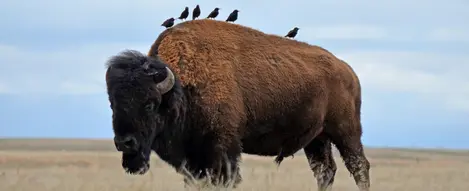
American Bison
The Significance of the Bison Transfer
In the ensuing years, the relocated herd thrived beyond expectations. By 2017, the bison population at Janos had swelled to 123. By 2018, it nearly doubled to 230. The end of 2025 saw an estimated herd of 460 to 500 individuals, marking a triumphant growth from the original 23. The burgeoning numbers validated the meticulous selection process at Wind Cave National Park and the foresight of conservation strategies linking the park to the Janos Valley.
The growth of the herd was not merely about increasing bison numbers. It aimed at impacting the ecosystem positively. Bison play a crucial ecological role; they graze unevenly, creating a patchwork of vegetation. Their movements help in seed dispersion, soil turnover, and nutrient recycling—all of which revitalize grassland habitats. This is particularly essential for the grasslands of Janos, which are among the last large native prairies in northern Mexico.
Expanding Conservation Efforts and Addressing Challenges
The successful multiplier effect of the Janos herd allowed for further expansion efforts. In 2020, 19 bison were relocated to the El Carmen reserve in Coahuila, and by December 2025, an additional 44 were set free near Cuatro Ciénegas, marking the third instance of reintroduction in northern Mexico since 2009.
Despite these efforts, challenges remain. The bison herd, although a conservation success, is still managed and fenced, highlighting the continuing threat to its natural population sustainability. The species remains listed as endangered in Mexico, underscoring the importance of ongoing management and funding for conservation initiatives.
South Dakota’s Enduring Legacy in Conservation
Wind Cave National Park’s role in this international conservation effort positions South Dakota not only as a steward of American wildlife but as a crucial player in global ecological restoration. The state, known for its breathtaking landscapes and rich history, is now celebrated for its contribution to reversing the decline of an iconic species thousands of miles away.
South Dakota, with its people, landscapes, and dedication, remains at the forefront of wildlife conservation. This endeavor is a testament to the power of collaboration and the profound impact that carefully orchestrated efforts can achieve in preserving our world’s natural heritage for future generations.
The bison’s journey from South Dakota to the grasslands of northern Mexico is an extraordinary narrative of revival, reminding us of our responsibilities to the environment and the possibilities that lie beyond borders when communities unite for a common cause.
Learn More about Bison Conservation Efforts
For further inquiries and involvement in bison conservation, interested parties can reach out to Wind Cave National Park. Email: info@windcavenationalpark.gov