
South Dakota Housing Market: Exploring Expectation Gaps and Community Life
As the allure of South Dakota’s picturesque landscapes and abundant open spaces continues to draw in new residents, recent studies reveal that the state’s housing market might require more careful consideration from prospective movers. Known for affordable living and access to the great outdoors, South Dakota appears challenging to some newcomers in terms of housing availability, affordability, and community integration.
The latest survey conducted by Portland Real Estate involved 3,011 individuals who relocated to different states over the last five years. Among the five South Dakota cities identified in the survey, Sioux Falls ranked number 63 nationally in terms of housing expectation gaps. Closely following were Rapid City at number 66, Watertown at 79, Aberdeen at 105, and Brookings at 110.
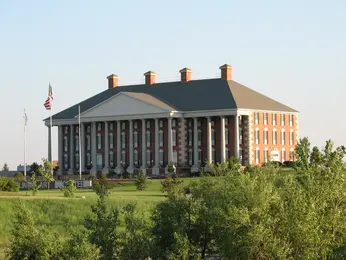
Watertown South Dakota
Despite aspirations of a slower pace of life and less expensive housing, newcomers frequently encountered competitive markets, seasonal demands, and trade-offs between choosing nature over urban conveniences. The survey detailed these notable discrepancies, known as ‘housing expectation gaps,’ emphasizing the surprises many faced after arriving.
South Dakota’s rich culture and welcoming inhabitants helped balance these challenges to some extent. An encouraging 53% of survey respondents expressed that the state’s residents were friendlier than expected. Nonetheless, integrating into established communities presented its difficulties, with 17% feeling that local social circles were well-established, and another 15% describing interactions as polite but not particularly forthcoming.
An insightful 63% of respondents occasionally found themselves reminiscing about homes from their previous communities, which they viewed as superior. Critically, 22% of participants seriously questioned their relocation decision based on their housing experiences, with an additional 44% expressing mild reservations.
The southern part of the state, particularly around Sioux Falls and Rapid City, highlights ongoing development barring rising demand. Historically appealing to outdoor enthusiasts, Rapid City’s proximity to the Black Hills and extensive hiking trails serves as a major draw. However, survey respondents noted certain deterrents such as limited house inventories and the intricacies of selecting between bustling city life and serene environments.
It’s not just South Dakota facing these issues, as reflected in the national cities with the largest housing expectation gaps like Honolulu, Hawaii; Las Vegas, Nevada; New Orleans, Louisiana; Denver, Colorado; and Anchorage, Alaska.
The findings indicate an essential realization for potential migrants: while lifestyle might be marketed based on environmental appeal and suggested benefits, actual housing scenarios play a pivotal role in fulfillment post-movement.
An unnamed spokesperson for Portland Real Estate commented that “Moving to a new city is often sold as a lifestyle decision, but housing is where that lifestyle becomes real. People may picture sunshine, space, walkability, scenery, or a slower pace, but the home itself can quickly change how settled they feel.”
For those considering a transition to South Dakota, it is advised to explore a comprehensive understanding of housing markets beyond mere pricing. Understanding inventory levels, demographic dynamics, and neighborhood characteristics is critical in crafting a fulfilling move.
South Dakota remains an intriguing prospect rife with potential, where integrating into communities rich with culture and natural beauty is possible with informed preparation. As individuals increasingly carry out lifestyle-oriented moves, appreciating the ‘housing expectation gap’ may guide better decision-making processes for future journeys.