
In a clash that underscores South Dakota’s pivotal role in the larger national conversation on election integrity, the state’s top legal and election officials find themselves at loggerheads over President Trump’s proposed changes to mail-in voting rules. With the 2026 midterm elections on the horizon, the debate has sparked discussions across the Mount Rushmore State, bringing both its history and its future into sharp focus.
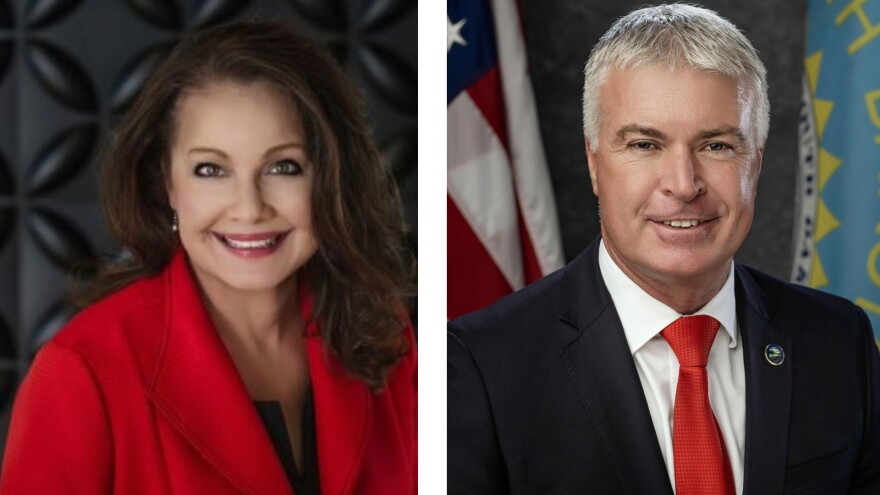
Monae Johnson
Secretary of State Monae Johnson, a key Republican figure in South Dakota, has voiced her opposition to the hasty implementation of the new mail-in voting requirements. Johnson, alongside other Republican election officials, signed an amicus brief presented to the U.S. Supreme Court, highlighting the potential disruption such changes could cause if enforced without adequate preparation time. She asserted, “The immediate implementation of these rules will almost certainly lead to mistakes, delays, and confusion for both voters and election officials.”
Attorney General Marty Jackley, another prominent face in South Dakota politics and a contender for the state’s sole seat in the U.S. House of Representatives, stands in stark contrast to Johnson’s perspective. Jackley has aligned with President Trump’s vision, advocating for swift enactment of the proposed changes. His support for Trump’s executive order and the United States Postal Service’s (USPS) final rule stems from a commitment to what he describes as safeguarding electoral integrity. However, his approach has drawn criticism for its perceived lack of consultation with local election officials. Christine Lehrkamp, Director of the Division of Elections, noted, “The AG did not consult the secretary, the deputy, or anyone in our office or election officials across the state before he signed on to defend the rules going into effect.”
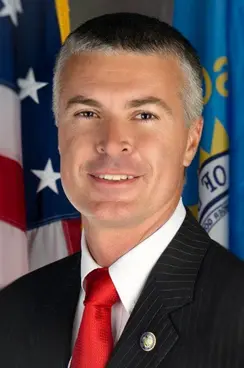
Marty Jackley
The core of the dispute rests on the proposed federal rule mandating states to provide USPS with lists of voters receiving mail ballots. This requirement, opponents argue, threatens to disenfranchise voters who rely on mail-in options, especially in a state where absentee and mail-in voting have historical roots dating back to the days of remote farming communities.
In South Dakota, absentee voting is slated to begin on September 18, a pivotal date as residents gear up for election day on November 3. The state has long prided itself on robust voter participation, facilitated by transparent and accessible voting processes. Despite concerns about potential voter disenfranchisement, Jackley has remained steadfast, stating, “I am committed to election integrity and to fighting election fraud.” This stance, however, contrasts with studies from the Brookings Institute indicating that mail voting fraud is exceedingly rare.
Noncitizens have never been allowed to vote in South Dakota since its statehood, and recent legislative efforts further reinforce this stance. The South Dakota Legislature recently implemented a verification process to challenge voter eligibility based on citizenship status, mirroring wider sentiments on maintaining electoral integrity.
Beyond mail-in voting, the political landscape in South Dakota is heating up. Secretary of State Monae Johnson, having lost her seat at the 2026 GOP Convention to Heather Baxter, a proponent of hand-counting and election security, will not appear on the upcoming ballot. Meanwhile, in the race for the U.S. House of Representatives, Attorney General Marty Jackley contends with Democrat Nikki Gronli, who has criticized Jackley’s support for the Trump-backed voting restrictions as causing “chaos and confusion” among voters.
As the state awaits the U.S. Supreme Court’s decision on the proposed rule, both Johnson and Jackley remain figures of interest. Their disagreement not only captures the tension within state politics but also reflects the broader national debate on voter access and election security, as the country continues to grapple with the best path forward.
With South Dakota’s unique place in this national dialogue, the choices made and actions taken in the coming months will resonate well beyond its borders, shining a light on both the challenges and opportunities inherent in safeguarding the electoral process.