
In the realm of marital agreements, South Dakota offers a unique landscape for high net worth individuals. Governed by the Uniform Premarital Agreement Act, enacted in 1989, South Dakota prenuptial agreements are notable for their straightforward requirements and distinctive legal boundaries.
South Dakota’s status as a top-ranked trust jurisdiction in the U.S. further amplifies its appeal. Known for its perpetual dynasty trusts, self-settled asset protection trusts, and robust privacy statutes, the state offers affluent couples a powerful toolkit to manage their wealth effectively.
Understanding the Framework for Prenups in South Dakota
South Dakota’s rules for prenuptial agreements are encapsulated in the Uniform Premarital Agreement Act. This legal framework ensures a prenup is valid if it is in writing, signed by both parties, and entered into voluntarily, with fair financial disclosure.
Importantly, South Dakota’s version of the UPAA intentionally excludes the alimony-waiver provision found in many other states. This aspect sets it apart, as prenuptial agreements in South Dakota cannot predetermine or restrict alimony, aligning with public policy under SDCL § 25-2-18.
Legal Considerations and Enforcement
The enforcement of prenuptial agreements in South Dakota follows two primary standards: voluntariness and the absence of unconscionability combined with inadequate financial disclosure. The South Dakota Supreme Court reinforces this by applying a severability clause, meaning even if a clause is deemed unenforceable, the rest of the agreement can remain intact.
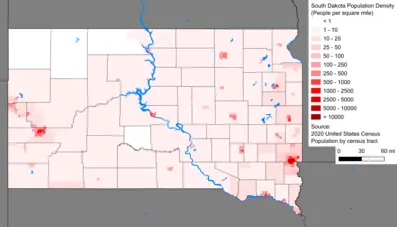
South Dakota
The Integral Role of Trusts in South Dakota
South Dakota stands out for its leadership in trust law, a crucial factor for ultra-high-net-worth couples drafting prenuptial agreements. The state’s abolition of the Rule Against Perpetuities allows for perpetual dynasty trusts, an attractive option for preserving family wealth.
Furthermore, South Dakota incorporates the strongest privacy measures for trusts, making it a preferred jurisdiction for those seeking confidentiality and asset protection. Trusts can seamlessly interweave with prenuptial agreements, providing a dual-layer strategy for asset protection.
The Interplay Between Trusts and Prenuptial Agreements
For wealthy couples, aligning prenuptial agreements with trust structures is pivotal. A well-crafted South Dakota prenuptial agreement can govern property division and estate rights, while trusts can serve as vehicles for insulating separate property from marital disputes.
Demystifying the Divorce Process in South Dakota
South Dakota’s divorce proceedings operate under the principle of equitable distribution as outlined in SDCL § 25-4-44, rather than community property norms. This means assets are divided fairly rather than split 50/50.
Notably, South Dakota has the most lenient residency requirements, allowing individuals to file for divorce on the same day they establish residency, providing they have genuine ties to the state.

Uniform Premarital Agreement Act
Common Pitfalls in High Net Worth Prenups
A frequent mistake is the inclusion of alimony-waiver clauses in prenups, which are void under South Dakota law. Additionally, insufficient financial disclosure can undermine enforceability, as seen in past cases like Sanford v. Sanford.
Best practices include a thorough financial disclosure process and consulting independent legal counsel for each party to avoid conflicts of interest.
The Strategic Advantage of South Dakota for Prenups and Trusts
Through its strategic legal frameworks, South Dakota offers unique advantages for those seeking security and predictability in marital agreements. The state’s emphasis on trust law complements its prenuptial regulations, providing a robust system for managing wealth and family legacy.
As families navigate complex financial landscapes, South Dakota’s combination of prenuptial agreements and trust provisions remain unmatched in the United States, providing powerful tools for future planning.