
The majestic Missouri River, often described as the lifeline of America’s heartland, stands at the center of a groundbreaking initiative spearheaded by South Dakota’s Governor Larry Rhoden. A coalition of six dedicated governors, representing states with vested interests in the river’s management, have launched an earnest appeal to Congress, advocating for a balanced and sustainable approach to the river’s resource management. Their focus is to influence critical legislative processes to avoid cumbersome stipulations that might hamper the effective utilization of the Missouri River Basin’s resources.
Earlier this week, Governor Larry Rhoden, a true representative of South Dakota’s rural communities, alongside governors from North Dakota, Colorado, Montana, Utah, and Wyoming, jointly addressed a letter to congressional leadership on the U.S. Senate Committee on Environment and Public Works and the U.S. House Committee on Transportation and Infrastructure. Their united stance underscores the importance of maintaining a sovereign management structure over a pivotal resource that benefits millions of residents across the heartland.
The governors’ plea specifically targets Section 120 of the 2026 Water Resources Development Act. According to Rhoden and his colleagues, this section imposes overly restrictive requirements, necessitating unanimous consent from the governors of ten Missouri River states before any action can be taken on water diversion or exportation projects. Additionally, the language of the section complicates initiating even the most preliminary studies by the Corps of Engineers on these vital projects.
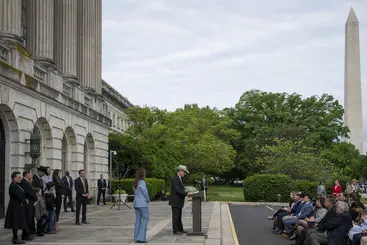
Governor Larry Rhoden
The rationale behind the letter resonates deeply within South Dakota, a state that prides itself on being a central part of the Missouri River’s expansive basin. Governor Rhoden emphasized the need for pragmatic policies that honor both state sovereignty and the river’s ecological balance. In his own words, Rhoden remarked, “We look forward to working with you to ensure that any final legislation respects established principles of federal and state law while supporting the long-term needs of communities throughout the Missouri River Basin and beyond.”
South Dakotans have a storied history of living in harmony with the river, leveraging its resources for agriculture, industry, and recreation. The state’s economy relies heavily on the river’s resources, which contribute to agriculture, water supply, and tourism. Ensuring that legislative frameworks do not inadvertently disrupt these vital components is crucial for sustained prosperity within the region.
The collective effort raised by the governors underscores the profound implications of neglecting state authority in resource management. By removing or revising Section 120, state leaders argue they can preserve their autonomy, ensuring that projects align with regional interests without being stymied by unnecessary bureaucratic inertia.
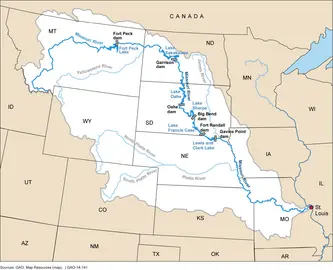
Missouri River Basin
Furthermore, there is a tangible concern about potential litigation and delays that may arise due to the current stipulations of Section 120. The governors warned that the provision, as it stands, could lead to protracted legal battles and hinder timely infrastructure developments necessary for environmental and economic sustainability. “Section 120 would grant the 10 governors of the Missouri River states absolute veto power over an entire sector of interstate resource distribution without any standards or guiding principles,” noted Governor Rhoden.
As debates unfold in legislative chambers, the eyes of South Dakotans remain fixed on ensuring that decisions made will lead to beneficial outcomes for the communities relying on this crucial water source. The Missouri River is not just a geographical feature; it’s a symbol of resilience for many South Dakotans, from farmers in the fields to fishermen along its banks.
In aligning their efforts with like-minded governors such as Kelly Armstrong of North Dakota, Jared Polis of Colorado, Greg Gianforte of Montana, Spencer Cox of Utah, and Mark Gordon of Wyoming, Governor Rhoden demonstrates the power of collaborative leadership focused on safeguarding regional interests against broad federal mandates.
The overarching goal is clear — to formulate policies that empower local governments to take charge of their resource management, ensuring that environmental stewardship and economic advancement go hand in hand. As such, the removal of Section 120 from the legislative proposal represents a crucial step towards reaching this objective, allowing states like South Dakota to retain control over their natural resources while fostering collaboration and innovation across the river basin’s states.
By championing this initiative, Governor Rhoden continues to embody the proactive governance that South Dakota undeniably values. His efforts, along with those of his colleagues, ignite a broader conversation about the roles that state leadership should play in managing shared resources, underlining the earnest commitment to serving the people of the Missouri River Basin effectively and equitably.
As discussions progress, the hope remains that Congress will heed the concerns of these governors and amend the proposed legislation in a manner that fosters development, efficiency, and robust state collaboration.
If you have further inquiries, please contact the Governor’s Office at govoffice@sd.gov or visit the South Dakota Governor’s official website for more information.