

South Dakota stands firm in its fight against federal fraud with the combined efforts of Attorney General Marty Jackley and U.S. Attorney for the District of South Dakota Ron Parsons. The synergy between state and federal authorities is a testament to the state’s commitment to maintaining integrity and accountability, even though South Dakota isn’t a prime target for fraudsters due to its smaller population.
Attorney General Jackley and U.S. Attorney Parsons convened at a press conference on March 26, 2026, echoing a clear message: “We’re making fighting fraud a priority.” This announcement followed the Trump Administration’s directive to combat fraud in government programs, which has been a cornerstone of many states’ agendas. Highlighting this priority, Parsons said, “It’s one of the priorities I’ve been given by the president, is fighting fraud and government fraud in government programs. And we’re gonna do that.”
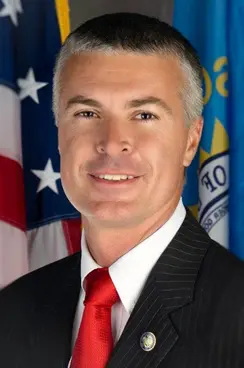
Marty Jackley
The context of these efforts is significant. South Dakota, known for its serene landscapes and close-knit communities, might not seem like a central hub for fraudulent activities. Yet, state officials understand the importance of vigilance. As Jackley noted, “We don’t have a lot of fraud. As I’m Chairman of the AGs, I’m in a lot of conversations with other AGs, meetings where I’m hearing about what is happening. So, we don’t have a lot of fraud, but we do have fraud.”
Preventive Measures and Legislative Support
South Dakota has made strides in adopting preventive measures against fraud. The state’s legislative session in 2025 saw the passing of new whistleblower protection laws. These laws are part of a broader effort to empower citizens and employees to report unethical and illegal activities without fear of retaliation. Whistleblowers serve as a fundamental component in unearthing fraud, playing a vital role in safeguarding public funds.
Parsons highlighted, “Tips and leads from employees, from contractors, and citizens are often how fraud is discovered.” Recognizing this, the state encourages citizens to come forward with information. Reports of suspected fraud can remain confidential and can be communicated through various channels.
- Report to the U.S. Attorney’s Office, District of South Dakota: (605) 330-4400 (Sioux Falls); (605) 224-5402 (Pierre); (605) 342-7822 (Rapid City)
- Contact the South Dakota Division of Criminal Investigation: (605) 773-3331
- Submit tips to the FBI: 1-800-CALL-FBI
- Report to the USDA OIG (crop/food programs): 1-800-424-9121
- Contact HHS OIG (Medicare/Medicaid): 1-800-HHS-TIPS
- Access GAO FraudNet via email or call (800) 424-5454
South Dakota’s Unified Front Against Fraud
South Dakota’s effort to combat fraud does not solely rely on state-level actions. The federal government has established the Department of Justice Fraud Enforcement Division, targeting fraud in every state. This move ensures that even smaller states like South Dakota, which may not experience fraud at the same scale as larger states like California and Minnesota, remain equipped to tackle any challenges that arise.
Parsons acknowledged, “South Dakota, being a smaller state, we’re just not the most attractive target. So, we haven’t seen that yet, but we have seen it in a state like Minnesota and California, larger states like that.” However, size does not deter South Dakota’s resolve. Both Jackley and Parsons emphasized that the integrity of public programs is paramount, and any form of fraud, regardless of its size, will be addressed.
Collaboration remains a critical factor. As fraud often involves complex networks, tackling it requires a coordinated approach involving state, federal, and public resources. This team effort, combined with the expertise and vigilance of government officials, forms a robust defense against fraudulent activities.
In the spirit of community involvement, South Dakota encourages its residents to remain vigilant and proactive. Individuals who possess insider knowledge about government fraud may file a qui tam lawsuit under the False Claims Act. This act provides a financial incentive, as individuals may receive between 15% and 30% of any government recovery, while also ensuring protection against retaliation. The message is clear: South Dakota values integrity and is committed to a transparent governance structure that benefits all its citizens.
In conclusion, although South Dakota is not the epicenter of federal fraud, its leaders remain steadfast in their mission to tackle fraud head-on. Through preventive measures, legislative support, and a collaborative approach, South Dakota is setting an example of how even smaller states can play a significant role in a national effort to combat fraud.