
RAPID CITY, S.D. – In recent years, artificial intelligence (AI) has permeated every facet of life, from enhancing law enforcement capabilities to revolutionizing healthcare and even influencing personal relationships. However, as this powerful technology grows, so does the potential for misuse. In South Dakota, ensuring the safe and ethical use of AI technology remains a priority for lawmakers and officials, led by Attorney General Marty Jackley.
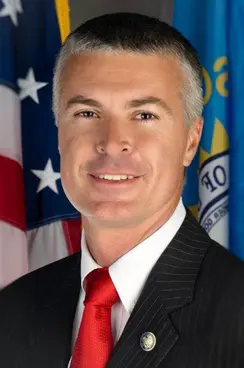
Marty Jackley
AI’s application in South Dakota is not just hypothetical; it’s real and involves significant legislative action. Attorney General Marty Jackley emphasizes the gravity of AI misuse, particularly with deepfake technology. “Some of the bad actors have taken advantage of it with deep fakes, which is when they essentially take a social media picture or video, and they plug it into pornography of someone’s loved one,” Jackley said.
In March 2023, South Dakota lawmakers passed a critical bill prohibiting the use of deepfake technology to sway elections. This move was a part of a broader effort to protect the integrity of the democratic process against technological manipulation. However, the effectiveness of state-level legislation is now under threat from a proposed federal order by former President Trump, which could prevent states from enforcing their own AI regulations.
South Dakota lawmakers
South Dakota House of Representative Steve Duffy has voiced opinions on the role of the federal government in AI regulation. According to Duffy, “I don’t think a bunch of citizen legislators from South Dakota or any other state, for that matter, has the expertise to regulate a very complex technology in its infancy.” Duffy’s stance opens up a conversation on whether state or federal authorities are best suited to manage the intricacies of AI legislation.
Beyond electoral integrity, South Dakota has made strides in other areas of AI regulation. In 2024, the state passed a law revising the definitions of child pornography, explicitly criminalizing the AI-manipulation and distribution of such material. This step underscores the commitment of South Dakota lawmakers to curb the exploitation of AI technologies in harmful contexts.
Despite these efforts, challenges remain. In May, Attorney General Marty Jackley, along with other Attorneys General, opposed a congressional budget amendment proposal that would prevent states from enforcing AI laws for a decade, a part of the contentious “Big Beautiful Bill.”
The debate over AI regulation is emblematic of a larger conversation happening across the United States. The balance between innovation and safety is delicate, and South Dakota, with its proactive approach, is positioned to be a leader in this arena. Yet, the potential federal intervention brings uncertainty.
For those in South Dakota and beyond, the implications of AI regulations extend deeply into public life. From protecting personal security to ensuring fair elections and shielding vulnerable groups from exploitation, the responsible governance of AI is crucial.
To continue keeping citizens informed and involved, KOTA encourages reporting any errors or providing feedback through their dedicated feedback form. Additionally, if you have emerging news content, you can share it using their user content form.
As the conversation around AI regulation evolves, South Dakota remains a focal point of significant legislative and ethical discussions, navigating the challenges posed by one of the most transformative technologies of the modern era.