
South Dakota’s Role in Prohibition: A Historical Journey
It was a pivotal day in the history of the United States’ Prohibition era when, on March 20, 1918, the South Dakota legislature ratified the proposed Eighteenth Amendment to the U.S. Constitution. This momentous decision signaled South Dakota’s commitment to the national movement that sought to curb the distribution and consumption of intoxicating liquors.
The Eighteenth Amendment prohibited the manufacture, sale, or transportation of alcoholic beverages within the state, aligning South Dakota with a transformative chapter in American history. This move was part of a broader effort across the nation as the temperance movement gained traction, particularly as World War I underscored the moral and ethical debates surrounding alcohol use.

South Dakota Legislature
The South Dakota legislature’s ratification of the Eighteenth Amendment was a deliberate choice reflecting the prevailing sentiments of its people. At the heart of this historic decision was the intent to foster healthier communities and reduce the social ills associated with alcohol abuse. The ratification marked South Dakota as one of the key states participating in this nationwide experiment in legislated morality.
Prohibition, known for its complex legacy, had a profound impact on South Dakota’s communities and economy. For many, it was a time of adaptation and resilience. The residents of South Dakota, embracing the spirit of the amendment, sought to improve their society by participating actively in the enforcement of Prohibition laws.
Historically, the movement towards Prohibition in South Dakota mirrored a national sentiment during the early 20th century that alcohol was responsible for many societal problems. It was a time when reform movements were widespread, and the nation was gripped by a desire to improve health, morals, and public safety.
South Dakota’s involvement in this national cause highlights its long-standing commitment to addressing societal issues through legislative means. This action was not merely a standalone event but part of a collaborative national effort requiring wide state legislative approval to be enacted into law.
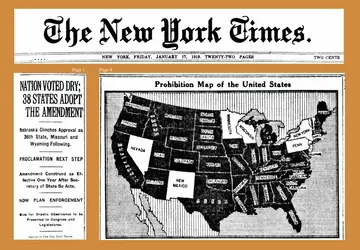
Eighteenth Amendment
The time around World War I was marked by a strong temperance movement, which gained momentum due to its focus on improving wartime efficiency and reducing domestic problems attributed to alcohol consumption. The ratification of the Eighteenth Amendment by South Dakota’s legislature was emblematic of this era’s prevailing ideologies and the state’s proactive approach to social engineering through legislative channels.
As South Dakota looks back on this historical decision, it’s crucial to recognize the complexities of the Prohibition era. While intended to eliminate the consumption of alcohol, it inadvertently prompted the emergence of illegal operations and bootlegging across the nation, including in South Dakota. The amendment’s legacy is a tapestry of both achievements and challenges that underscore the nation’s evolving values and legal frameworks.
Today, South Dakota’s rich history during the Prohibition era is a testament to its resilient spirit and community-centric values. The state’s legacy continues to be reflected in its ongoing emphasis on community welfare and law-making that seeks to balance public interests.
For more information about South Dakota’s history during Prohibition and its legislative journey, visit [KOTA](https://www.kotatv.com). To report a spelling or grammatical error in our stories, please click [here](https://www.kotatv.com/page/send-us-your-feedback/). If you have a photo or video of a breaking news story, send it [here](https://www.kotatv.com/community/user-content/).