

Whitney Bischoff, the student programs manager for Lost&Found, is spearheading an innovative initiative in South Dakota aimed at reshaping student support systems by leveraging the inherent brotherhoods and sisterhoods within Greek life. Lost&Found, a South Dakota-based nonprofit, is dedicated to preventing suicide among young adults through its Peer2Peer mentorship program. Bischoff recognized the potential of Greek life organizations to enhance this model by infusing structured mentorship with already existing informal systems like ‘little brothers’ and ‘little sisters.’
Bischoff states, “I had been trying because we know Greek life organizations have informal mentors, little brothers and little sisters, built into their system, but they don’t have a lot of training on what it means to mentor and support the students.”
The endeavor began to gain traction at the South Dakota School of Mines & Technology, or Mines, with Jack Myers, a junior mechanical engineering major and vice president of Phi Kappa Tau. Myers expressed enthusiasm at how Lost&Found offers mental wellness structure within their fraternity, highlighting a communal appreciation for the initiative. He said, “I loved how Lost&Found provides structure to the mental wellness of our house. It forces these impactful conversations and brings us closer together in brotherhood.”
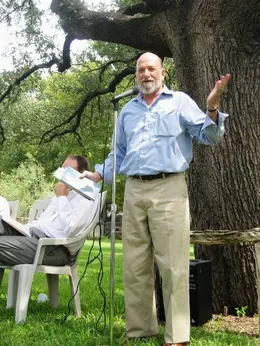
Jack Myers
This pilot program, launched in the spring thanks to funding from the South Dakota Department of Health, involves four fraternities and one sorority at Mines. The initiative aims to improve mental health and foster resilience among young adults, aligning perfectly with Greek life’s focus on connection and belonging. “Peer2Peer offers a ready-made approach that aligns with those recommendations while helping students build resilience,” Bischoff mentioned.
Inspired by research from the JED Foundation, which advises on mental health priorities for Greek organizations, the program tackles issues like stigma reduction and risk management concerning hazing, substance misuse, and sexual exploitation. Bischoff emphasizes a culture change in Greek organizations, urging them to create networks of support that transcend individual chapters. “We have four Greek organizations at the University of South Dakota who are joining in the program, and a colleague on a national chapter for a different fraternity said they have interest on a national level,” she added.
Participants from the Kappa Tau house at Mines are already noticing positive results, including elevated brotherhood morale and stronger personal connections. “These topics help guide the conversation in a positive way and create a safe environment for both the mentee and mentor,” Myers explained. The students engage in weekly or bi-weekly meetings for 16 weeks, discussing guided prompts while allowing conversations to develop organically. Bischoff notes the importance of spontaneous discourse, “We give them topics to talk about, but also want things to come up organically.”
South Dakota’s support for this movement highlights the state’s commitment to innovative mental health solutions. As this pilot evolves, the objective is to build a campus-wide supportive network with long-lasting impact. Building on the partnership between Greek life organizations and Lost&Found, Bischoff aims to expand this model to other university campuses, potentially influencing Greek chapters nationwide.
The success of the program underscores South Dakota’s dedication to youthful wellbeing, employing traditional community frameworks in groundbreaking ways to promote emotional health. This initiative not only bolsters the morale within Greek houses but also instills broader cultural shifts towards empathy and resilience, making it a noteworthy component of South Dakota’s approach to mental health advocacy in education.