
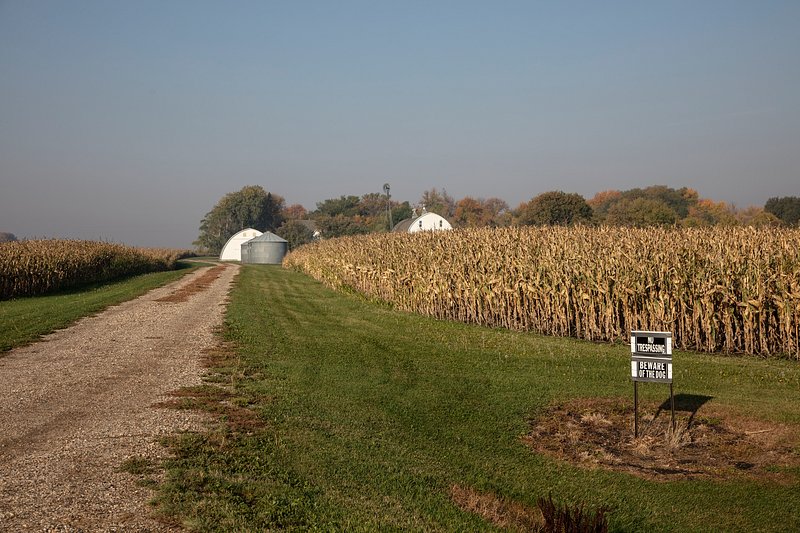
In the heartland of South Dakota, the roots of agriculture extend far beyond its borders, reaching global markets that value the state’s high-quality soybeans. Tara Bierman, a dedicated soybean, corn, oats, and poultry farmer from South Dakota, embarked on a remarkable journey to Cairo, Egypt, to participate in the Soy Checkoff’s See for Yourself trade mission. Her experiences underscore the intricate connections between local farming practices and global food systems.
At the WorldFish facility in Cairo, Bierman was handed a small fish fingerling and invited to participate in the tagging process—a moment that transcended cultures and continents. “Who wouldn’t want to tag a fish?” she laughed, capturing the essence of curiosity and learning that the trade mission inspires among U.S. farmers.
The objective of the venture was simple yet profound: to provide U.S. farmers with firsthand insights into how international demand shapes their work back home. For Bierman, standing amidst the bustling vibrancy of Cairo, it became evident how the soybeans she nurtures on her South Dakota farm play a pivotal role in fueling a global protein economy.
The South Dakota Soybean Association (alignleft) enables farmers like Bierman to connect with international markets, learning about market demands and sustainable practices that are increasingly important in today’s eco-conscious world. “It’s all about market diversification,” Bierman stated, asserting the interconnected web of global demand that ultimately supports commodity prices locally in South Dakota.
In Cairo, the process of tracking fish was a tangible analogy to livestock tracking in the U.S., an area of agriculture familiar to Bierman. Fish are weighed, measured, and tagged, then scanned over time to monitor their growth, much like livestock management practices back home. “I just never thought about how you would track fish,” Bierman mentioned. “It was pretty neat.”
Egypt, the fourth largest export market for U.S. soy, is experiencing a skyrocketing demand for protein due to its rapidly expanding population. Most Egyptians consume meat just once a month due to financial constraints, signaling a growing need for affordable protein sources such as soy-fed poultry and fish. This demand makes Egypt not only crucial for U.S. soy farmers but also a hub of opportunity for sustainable growth and partnerships.
The distinction of U.S. soy in global markets can be attributed to the four Ds: naturally dried, reduced damage, digestibility, and deforestation-free production. “Those four Ds help us better market U.S. soy around the world,” Bierman explained. The commitment to sustainability resonates with Egyptian buyers, who appreciate the reliable quality and environmental consciousness of U.S. soy production.
From South Dakota’s rolling fields to bustling trade in Cairo, the U.S. soy market thrives on its rigorous market diversification strategy, which has resulted in a 12% year-over-year increase in exports. Most soybeans from South Dakota are shipped via the Pacific Northwest to Asian markets, highlighting the intricate tapestry of global trade and demand.
Bierman’s involvement as a board member of the South Dakota Soybean Association exemplifies the leadership required to navigate these global challenges and opportunities. “We need leaders everywhere in everything,” she articulated. “Otherwise, important work like this isn’t going to get done. Not everybody has to be the president or travel the world, but find what you’re good at and be willing to help. Step up wherever you can.”
Her journey to Cairo, not just a professional foray but also a cultural expansion, reflects how South Dakota farmers remain integral to a vast network of global food systems. As Bierman cultivates her fields, she nurtures a vision that extends far beyond geographical limits, embracing a future where local actions resonate globally.
Tara Bierman