
On December 2, 1957, the skies over South Dakota became the backdrop for a significant yet little-known chapter in U.S. military history as the U.S. Army embarked on an unusual mission. This was the first day of Operation LAC, a series of biological tests conducted to explore battlefield applications of certain agents. Though the initiative stretched from South Dakota to International Falls, Minnesota, its roots were planted firmly in Rapid City, S.D., a testament to the state’s strategic importance.
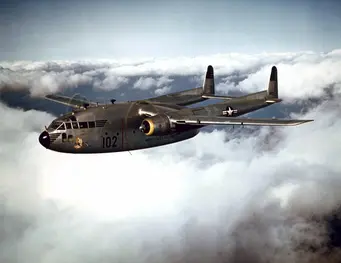
Operation LAC
At the heart of this operation was the objective to determine which chemicals or biological agents could be effectively used in warfare scenarios. This was not a random exercise; it was borne out of a growing need for defensive and offensive preparedness during a time when Cold War tensions were palpable. South Dakota, with its expansive skies and strategic location in the heart of the nation, was chosen as a site where these delicate tests could be safely conducted.
The tests, carried out by the U.S. Army, utilized what were then considered nontoxic stimulants. These substances were dispersed over a vast area, marking South Dakota as a critical focal point in the understanding and development of military biological capabilities.
From the plains and rolling hillsides of South Dakota to the edge of Minnesota, aircraft released these stimulants, meticulously documenting how they dispersed and behaved in open air. Such studies were essential in crafting responses to potential biological threats, a vital concern during that era.
Operation LAC highlighted Rapid City, S.D., both as a canvas for military innovation and as a community threaded into the broader fabric of national defense. It placed South Dakota on a map not just of geographical importance but of scientific and military relevance.
Given the operation’s scale and significance, it resonates in state history as an instance where South Dakota’s landscapes were integral to pivotal national research. The tests remain a poignant reminder of the state’s role in supporting extensive military initiatives, reflecting a period where defense readiness was patently paramount.
In the broader narrative of military exercises, the people of South Dakota historically mirror an ethos of resilience and adaptability. This characteristic is seen as they facilitated and coexisted with these military undertakings while maintaining the agrarian and community-focused lifestyles emblematic of the state.
For those interested in glimpses of this intriguing past, the story is well archived, and KOTA invites readers to explore further or contribute with photos or footage of related historical events through their email. They also welcome viewers to provide feedback or report errors through their feedback page.
As the years have passed, stories like Operation LAC serve as educational pieces, enlightening current and future generations about the historical intricacies of South Dakota. Episodes such as these reinforce the state’s role as a participant in matters of national significance, rallying its people under the shared banner of advancement and security.
Moreover, the legacy of such tests reverberates through South Dakota’s approach to current technological and scientific projects, marking the state as not merely a veteran in military affairs but an ongoing contributor to research and development that spans far beyond its borders.
It is through such tales that South Dakota’s diverse contributions to U.S. history are clearer—a state of rugged beauty and rich heritage, instrumental not only to military initiatives but a beacon of innovation and ingenuity in the heart of America.