
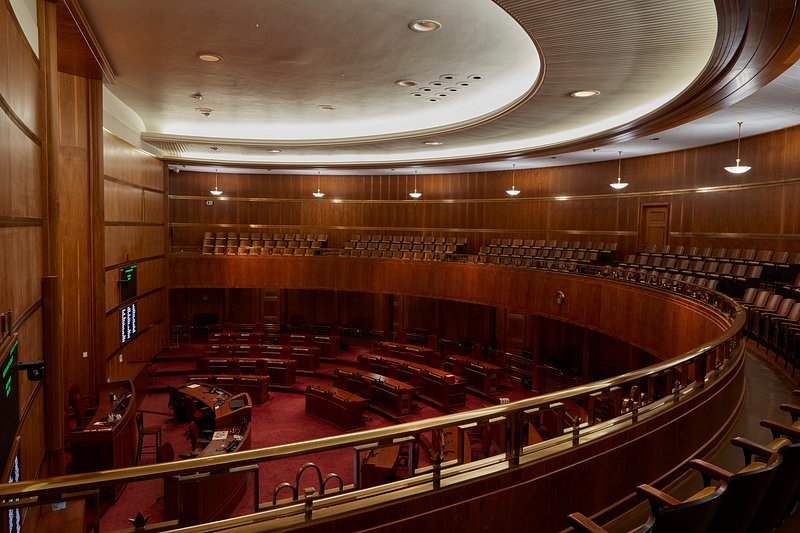
In a recent turn of events, Governor Larry Rhoden delivered his budget address, putting the spotlight on South Dakota’s financial strategy. The speech was critical in shaping the fiscal future of the state, focusing on no funding increases for public schools, state employees, or community health care providers. Rhoden justified this decision on the basis of relatively flat state revenue.
For South Dakotans closely monitoring the state’s financial decisions, the address highlighted pressing concerns. The absence of funding increases in crucial sectors like education, healthcare, and public service provoked discussions about the state’s fiscal health and resource allocation strategy.

Larry Rhoden
Seth Tupper, the editor-in-chief of South Dakota Searchlight, expressed his concerns in an editorial. His commentary, “A New Year’s Resolution for South Dakota: Stop Flushing Dollars, Then Pinching Pennies”, delves into the implications of the governor’s decision on South Dakota’s socio-economic landscape. Tupper, alongside journalist Kevin Woster, discussed these nuances in a Dakota Political Junkies analysis, hosted by SDPB’s Lori Walsh.
The trio explored how these budget choices could affect the daily lives of South Dakota’s residents. It is crucial to note that education, healthcare, and public service sectors are vital for fostering growth and maintaining quality standards in the state. By choosing not to increase funding, questions arise regarding the long-term impact on South Dakota’s infrastructure and its ability to serve its citizens effectively.
Education is at the heart of these concerns. South Dakota’s public schools require adequate funding to ensure that children receive a high quality of education. The state’s educators and staff play a pivotal role in this ecosystem. Without additional resources, schools may struggle to provide competitive salaries, retain skilled teachers, and offer comprehensive educational programs.
Community health care providers also stand at a crossroads with no additional funding in sight. These providers are essential, offering critical services to South Dakotans across the state. In rural areas, especially, these services are a lifeline.
The decision not to increase funding comes amidst slow state revenue growth. South Dakota’s economy, largely reliant on agriculture and tourism, faces challenges that impact state revenue streams. Optimizing resource allocation without sacrificing essential services remains a significant challenge for Governor Rhoden’s administration.
Kevin Woster, during the discussion with Lori Walsh, highlighted, “We cannot just accept this stagnation in funding without understanding its repercussions on our community’s well-being.” His statement underscores a critical concern shared by many in the public domain about ensuring the state’s long-term financial stability while addressing immediate needs.
Governor Rhoden’s budget address has stirred conversations among South Dakota’s citizens and policymakers alike. The quest to balance fiscal responsibility with the state’s growth and service requirements continues to be a topic of paramount importance.
As the debates unfold, South Dakotans remain hopeful for strategic solutions that reflect prudent financial management, fostering a brighter future for their communities.
To delve deeper into the details of this budgetary decision, visit the South Dakota Searchlight and join the conversation about South Dakota’s fiscal policy.
The discussions from this budget address not only about numbers but about the state’s course for serving its people effectively while navigating economic challenges ahead.