
South Dakota, a state rich in history and pioneer spirit, boasts the largest Hutterite population in the United States. Over 7,000 people spread across more than 60 colonies, primarily situated in the state’s eastern region, call South Dakota their home.
The Hutterites are a unique communal group with roots tracing back to central and eastern Europe. Originally, they migrated to North America in the 1870s in pursuit of religious freedom, settling predominantly across states like South Dakota, North Dakota, and Minnesota, and stretching into Canada. Their first settlement in South Dakota was the Bon Homme Colony near Springfield, established in 1874.
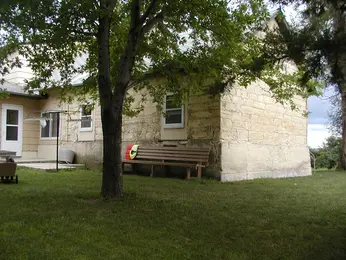
Bon Homme Colony
South Dakota’s landscape is dotted with these Hutterite colonies, which have become an integral part of the state’s agricultural backbone. Hutterite communities rely primarily on large-scale farming, contributing a significant 10% to South Dakota’s farming population. In fact, these colonies are known for their innovative farming techniques and high productivity, providing both economic and social stability within the state.
The U.S. Census Bureau does not specifically track the number of Hutterites, but a 2010 estimate indicated that they comprise approximately 0.7% of the state’s population. The largest concentrations of Hutterites in South Dakota are found in the counties of Faulk, Hanson, McPherson, and Clark. These communities typically consist of 15 or more families living communally, a testament to their commitment to a lifestyle centered around shared resources and collective decision-making.
Hutterites are more than just farmers; they also operate a variety of shops that offer products ranging from handcrafted goods to essential services, further embedding themselves into the local economy. This commerce not only supports their colonies but also contributes to the economic diversity of South Dakota.
South Dakotans have come to appreciate the Hutterite way of life, which emphasizes community, cooperation, and sustainability. These values resonate well in a state known for its vast plains and strong agricultural roots. The Hutterites’ blend of tradition and modernity ensures that they remain a vibrant part of the tapestry that is South Dakota.
Though living communally, Hutterites actively engage with their non-Hutterite neighbors. This interaction fosters a unique cultural exchange and enriches the South Dakota community as a whole. Their settlements offer a glimpse into a world where traditional values meet contemporary practices, a balance that few other communities can claim to have mastered so effectively.
If you’re ever in South Dakota, a visit to a Hutterite colony could offer an insightful look into a harmonious blend of past and present, where the simplicity of rural life meets the complexities of modern agriculture.
For more information on Hutterites and their communities in South Dakota, feel free to contact us at info@sodak.news.