
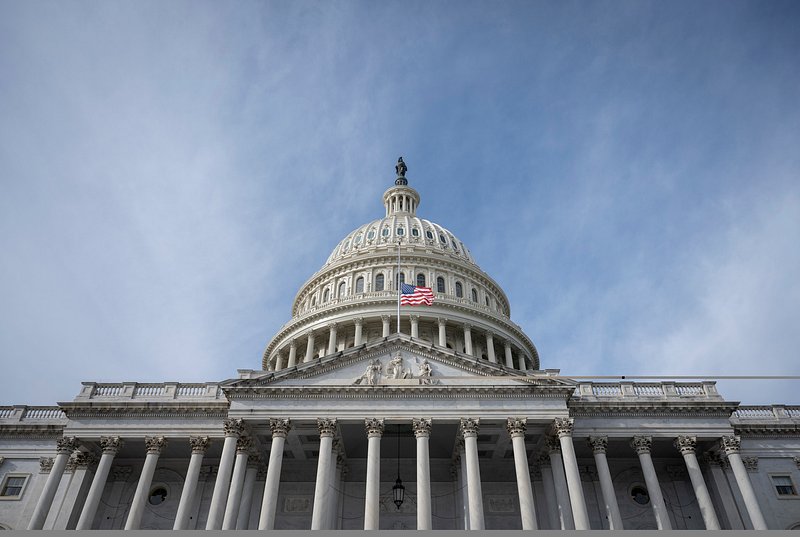
In a move that has sparked widespread disappointment among educators, healthcare providers, and state employees, South Dakota Governor Larry Rhoden has proposed a state budget for 2026 that omits any funding increases for these critical sectors. The decision, announced during Rhoden’s annual budget address at the South Dakota State Capitol in Pierre, comes amidst constrained revenue growth.
The Governor acknowledged that while revenues have not grown significantly, leading to a plateau in the budget, many within South Dakota are feeling the financial squeeze, especially in education and healthcare. Critics have drawn unflattering comparisons to the infamous scene in National Lampoon’s Christmas Vacation, where a protagonist’s holiday bonus was replaced with a membership to a jelly-of-the-month club.
The fiscal constraints faced by South Dakota stem from a series of financial decisions made in previous years. In 2022, South Dakota reduced its state sales tax rate from 4.5% to 4.2%. Although seemingly minor, this adjustment resulted in a significant annual revenue loss—over $100 million. The tax cut was initially designed to alleviate some of the property tax burdens homeowners were facing, but the savings have gone largely unnoticed by consumers, who are only saving a penny for every $3.33 spent.
Adding to the state’s financial woes was a costly misstep by former Governor Kristi Noem’s administration. An attempt to modernize the state’s correctional facilities resulted in the expenditure of $20 million on a prison project located in Lincoln County, which was later abandoned due to legal challenges and opposition from local landowners.
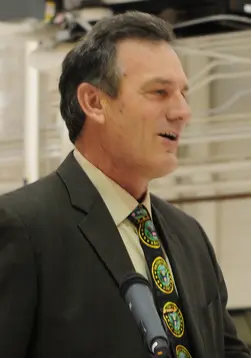
Larry Rhoden
Under Rhoden’s leadership, a task force was formed to re-evaluate the prison site selection, which eventually recommended a new location in Sioux Falls. However, the financial penalties from the initial project’s failure remain a sore point for the state, with $20 million already sunk into the abandoned site.
Further controversies have arisen regarding economic development incentives. A spotlight has been thrown on the $69 million package comprising grants, loans, and tax rebates granted to CJ Schwan’s for establishing a new frozen food production plant in Sioux Falls. The investment is poised to create 650 new jobs but has been criticized for the high cost of state aid per job. This aid package coincides with the involvement of state economic figures, such as Steve Westra, who promised the initial support to CJ Schwan’s before joining the company. CJ Schwan’s parent company, CJ Group, is a global player with $30 billion in annual revenue, dwarfing South Dakota’s state budget.

Kristi Noem
The pushback from these decisions illustrates the tension between economic development and fiscal responsibility. South Dakota’s citizens and lawmakers find themselves grappling with the broader implications of these policies, especially in light of Rhoden’s austere budget proposal, which has been viewed as insufficient and dismissive of current needs in public services.
South Dakota is a state known for its vast landscapes, rich Native American heritage, and pivotal role in the westward expansion. The current fiscal debates echo the stories of resilience and management of resources that have characterized its history. At the heart of the negotiations over the state budget lies the balance between preserving South Dakota’s traditions and adapting to present-day fiscal challenges.
As the legislative session approaches, South Dakota’s lawmakers must decide whether to support Rhoden’s budget or push for changes that may address the state’s pressing educational and healthcare demands. The decision will undoubtedly impact the state’s trajectory in economic and community development, areas crucial to its people’s well-being and prosperity.
The outcomes of these decisions will be closely monitored by South Dakotans who rely on public services, educators hoping for more funding, and healthcare providers in need of financial support to ensure quality care. As Governor Rhoden wraps up his first full budget since taking office, all eyes are on Pierre to see what South Dakota’s future holds.