
Allison Renville: A Historic Run for Governor in South Dakota
RAPID CITY, S.D. — South Dakota is witnessing a historic gubernatorial race as Allison Renville, a Native woman, has announced her candidacy for the 2026 governor’s race. Renville, from the Sisseton Wahpeton Dakota, Hunkpapa Lakota, Omaha, and Haudenosaunee tribes, stands as the only female candidate currently in the race, marking a significant moment for both Indigenous representation and women in politics within the state.
Despite having the fourth-highest American Indian and Alaska Native population in the United States, South Dakota has never elected an openly Indigenous governor. Renville’s candidacy is not only historic but also deeply personal. She grew up in Sisseton on the Lake Traverse Reservation and currently resides in Sioux Falls, South Dakota’s largest city.

Sisseton Wahpeton Oyate
“I think I moved here (Sioux Falls) with the intention of getting involved politically,” Renville stated. “I was not anticipating as much involvement as I’ve had, but it’s really welcome and it’s allowed me to learn so much about the city from so many different directions. And I feel well informed making this decision to run for governor.”
Renville launched her political career nearly a decade ago during her participation in the Dakota Access Pipeline protests. The controversial pipeline posed environmental threats to sacred burial sites and the Missouri River, vital to the Standing Rock Reservation. Her political journey furthered as she campaigned for Bernie Sanders in the 2016 presidential election and later founded the Political Action Committee, Dakotas for America, to bolster Native candidates’ political representation.
Her PAC faced hurdles, with the state incorrectly assuming that tribal funds amounted to federal dollars. However, these challenges were dismissed given the legitimate registration on the Lake Traverse Reservation.
By mid-October, Renville announced her gubernatorial candidacy as an Independent. On October 28, she secured enough signatures to be ballot-listed, a testament to her pivotal campaign that seeks to rise above traditional party lines.
“I honestly don’t think I’m disillusioned by party politics anymore,” Renville remarked, emphasizing her Independent run.
Addressing key issues prevailing in South Dakota is a priority for Renville, focusing on housing shortages, gentrification, and homelessness. With South Dakota’s population swelling by over 100,000 since 2020 and forecasts predicting a milestone of one million residents by 2030, Renville advocates for smart, sustainable, and inclusive growth. She promotes a renovation over gentrification approach, repurposing existing infrastructures to revitalize neighborhoods.
“Growth should be smart, sustainable, and inclusive,” Renville commented on her campaign website.
Homelessness, intricately tied to the gentrification issue, is another area Renville intends to reform. By enhancing resources and support for homeless initiatives, she aims to develop a strategy marrying shelter provisions with access to mental healthcare and housing pathways.
Renville also plans to bridge the profound gap in healthcare access for South Dakota’s Native population. With the recent closure of a local women’s health clinic in Sisseton, tribal communities face arduous journeys for OB-GYN and prenatal care. Renville’s platform plans to address healthcare shortcomings exacerbating the crisis of Missing and Murdered Indigenous People (MMIP).
“We don’t have abortion access in South Dakota. What happens to girls who are women or even men who are being attacked in these situations?” Renville questioned. “Where do they go? We have a great healthcare system here in Sioux Falls, but how are we challenging these systems to reinvest in communities so the uninsured receive proper care?”
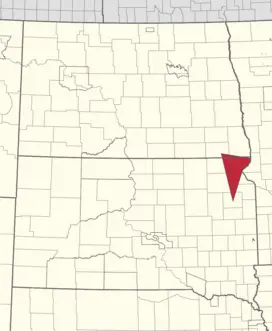
Lake Traverse Reservation
The tangled relationship between the governor’s office and Native tribes needs significant mending, states Renville. Incidents like former Governor Kristi Noem’s ban from all nine tribal reservations due to her disparaging remarks have highlighted this need starkly.
“I think a lot of (change) starts with education,” Renville affirmed, underscoring the necessity of a comprehensive education regarding South Dakota history, Native American heritage, and the settler colonial implications in governance.
As she commenced her campaign on October 31, Renville began visiting communities statewide, fostering dialogue and awareness. The South Dakota gubernatorial election is expected to be held on November 3, 2026, with Renville poised to break barriers and enact transformative changes.
“I’m a strong believer in South Dakota being the easiest place to vote in,” concluded Renville. “We’re working on maximizing every available opportunity for our people.”