
Federal aid plays a significant role in sustaining the economy and infrastructure of South Dakota, contributing approximately a quarter of the state’s revenues. This funding supports crucial areas such as disaster recovery, food assistance, healthcare programs like Medicaid, and transportation systems. However, the federal government retains full discretion over these transfers, exercising influence over state policies, a practice that gained attention during the Trump administration.

Donald Trump
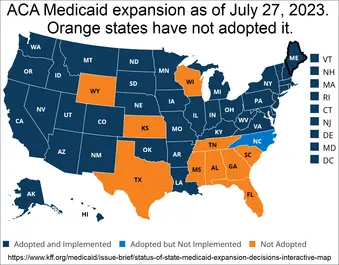
Historically, federal funding has been used as leverage to implement policies at the state level. For instance, the nationwide adoption of the 21-year drinking age and mandatory seatbelt laws were tied to federal highway funding. As of 2023, South Dakota, alongside Wyoming and North Dakota, received the least federal funding among all states, amounting to $3.8 billion. Despite this, federal aid’s influence in the state is substantial, especially through programs like Medicaid, which now accounts for 57% of federal transfers.
South Dakota
In 1980, federal transfers amounted to around $300 billion, but by 2023, they had ballooned to $1.1 trillion. This increase highlights the growing shift from discretionary to mandatory funding programs, which accounted for 73% of federal transfers by 2023. While the share of federal aid in state budgets has remained consistent due to parallel growth in state and local revenues, the role of these funds in South Dakota can’t be understated.
- Federal aid forms a quarter of South Dakota’s budget.
- Medicaid expansion significantly impacts the flow of federal funds into the state.
- South Dakota’s relatively small population results in lower total federal aid despite high per capita needs.
Federal funding’s reliability is vital for South Dakota’s fiscal health. The state’s financial plans often account for possible federal aid fluctuations, especially discretionary funds, indicative of Washington’s discretion in allocation and policy influence. South Dakota has been navigating these complexities while maintaining fiscal discipline and avoiding the burden of excessive debt compared to many other states.
Medicaid
The Trump administration’s approach brought the role of federal aid in driving state policies into sharper focus. The threat of withholding funds from non-compliant states highlighted federal transfers not just as financial tools but also as policy enforcers. For South Dakota, which has managed to stay financially resilient, understanding the implications of such federal pressures is crucial for its continued autonomy and fiscal stability.
As South Dakota navigates its unique challenges and opportunities, the ability to effectively manage federal aid and maintain balanced relations with Washington will remain pivotal. The residents and local governments must stay informed and prepared to adapt to any shifts in federal funding policies, ensuring that the state continues to thrive independently.