
South Dakota, a state known for its vast landscapes and tight-knit communities, faced Mother Nature’s wrath this summer, leading Governor Larry Rhoden to seek federal assistance. A series of severe storms wreaked havoc in late June and early July 2026, particularly devastating the regions of Highmore and Huron.
Highmore’s Battle with Nature
On June 28, Highmore, a small town renowned for its resilient citizens and prairie landscapes, was struck by a powerful storm. According to the National Weather Service, wind gusts exceeded 130 miles per hour, a speed capable of flattening trees and structures alike. The aftermath left the community reeling, with residents rallying to begin the arduous cleanup.
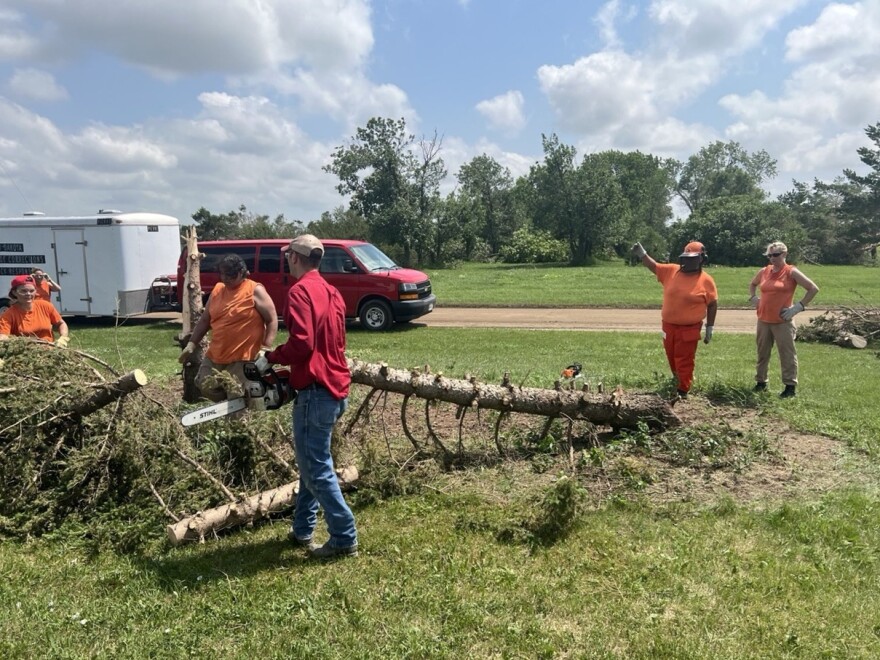
Highmore storm cleanup efforts
Governor Rhoden, acknowledging the steadfast spirit of South Dakotans, remarked, “I saw the devastation first-hand in both Highmore and Huron from these severe storms, and I had eight state agencies on the ground to assist in the responses.” His visit underscored the urgency of the situation and further galvanized local efforts.
Highmore village square, typically a place of community gatherings, became a hub for volunteer coordination. Residents tirelessly worked to clear debris while businesses lent equipment and supplies. It was a testament to the town’s unity amidst adversity.
The July Storm’s Fury on Huron
Just days later, on July 2, Huron, a city positioned as a vital agricultural hub, encountered another onslaught from Mother Nature. The storm’s impact was no less severe, with many homes, barns, and crop fields suffering extensive damage.

Highmore’s resilient landscape post-storm
Local farmers, integral to South Dakota’s economy, faced the daunting task of assessing crop losses during a critical growing period. The average annual cash receipts from farming in South Dakota are significant, with corn and soybeans being primary drivers.
Statewide Impact and Presidential Disaster Request
The impact of these storms extended beyond individual counties. Governor Rhoden’s disaster declaration request includes a total of eight counties – Beadle, Bennett, Buffalo, Day, Hand, Hughes, Hyde, and Stanley, along with the Crow Creek and Lower Brule Reservations. These areas are crucial to both cultural heritage and agricultural productivity in South Dakota.
The preliminary damage estimate reached $4,564,928, a figure well above the federal threshold for disaster assistance. Hyde County alone reported damages of $2.8 million, while Beadle County reported nearly $900,000 in damages. This cumulative impact prompted Governor Rhoden to emphasize, “This request would provide several million dollars in federal funding to help these communities recover. I thank President Trump in advance for his consideration and his help.”
Path to Recovery and Future Preparedness
If approved, the presidential disaster declaration will facilitate vital federal financial support, covering 75% of public assistance costs, with complementary contributions of 10% from the state and 15% from local sources. Additionally, the declaration would enable hazard mitigation grant funding, offering a future shield against similar disasters.
For the people of South Dakota, bolstered by pride and community spirit, the approval of this request is not just about recovery, but also about strengthening for future resiliency. The storms have showcased the state’s vulnerability but also its unwavering resolve to rebuild stronger.
Governor Rhoden’s proactive involvement and the community’s robust response epitomize the enduring spirit of South Dakota. As the state awaits the federal decision, its residents continue to band together, demonstrating that in South Dakota, recovery is a collaborative effort.
For further details on the preliminary damage assessment, visit the state’s official document here.