
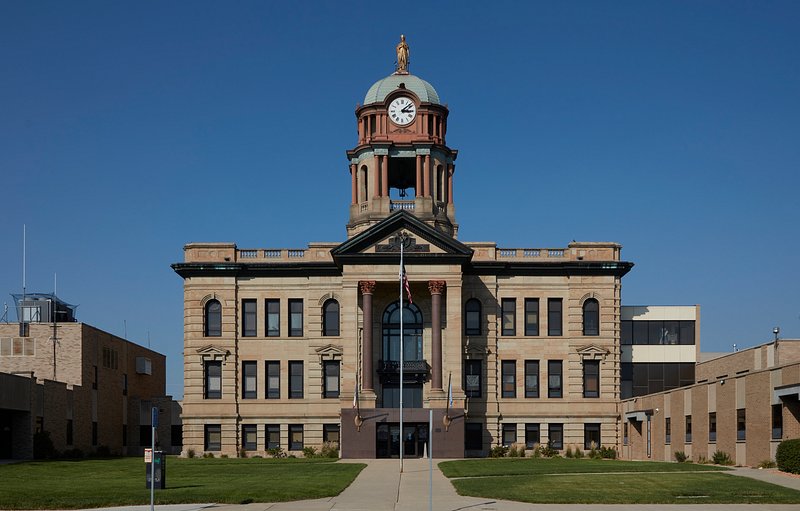
In a landmark decision on a Thursday in 2024, the South Dakota Supreme Court upheld a ruling that the names of two police officers involved in a shootout with a suspect can be retained from public disclosure. This ruling stems from the provisions of Marsy’s Law, a state constitutional amendment aimed at safeguarding the identities of crime victims, which the court determined to be applicable to police officers.
Justice Howard G. Fuller, who penned the opinion for the court, emphasized the need to protect officers from potential harassment. The decision acknowledges the delicate balance between public transparency and the safety of law enforcement officers and their families. The decision reversed a lower court’s ruling, marking a significant turn in how victims’ rights, particularly those of officers, are approached under state law.
The ruling drew upon Marsy’s Law, which was overwhelmingly approved by South Dakota voters to enhance victims’ rights. This amendment has been pivotal in shaping legal landscapes across the state, ensuring that those who fall victim to crimes can secure certain privacy rights. The Supreme Court’s decision to include police officers under the umbrella of “victims” highlights the evolving interpretation of this law.
South Dakota, known for its vast prairies and the iconic Mount Rushmore, is a state where community and safety are deeply cherished values. The decision, therefore, resonates strongly with residents who prioritize both transparency in law enforcement and the protection of those who serve. The ruling not only affirms the commitment to privacy but also acknowledges the potential risks that public disclosure of officers’ identities could pose to their safety.

South Dakota Supreme Court
The case in question involved two officers engaged in a high-stakes shootout with a suspect. Amidst rising concerns about the safety and security of law enforcement officers, the court’s decision underscores a broader debate across the United States about the extent to which police personnel should be considered victims under laws intended to protect those impacted by crime.
The application of Marsy’s Law to police officers in South Dakota is a step that potentially paves the way for other states to consider similar protections. The ruling could have implications for law enforcement transparency versus privacy concerns more broadly, a topic of significant interest not only to South Dakotans but also in national discussions about policing and public safety.
Marsy’s Law
As part of South Dakota’s judicial landscape, this decision places the state at the forefront of defining how victims’ rights laws are applied to law enforcement. The ruling reflects a prudent approach to ensuring officers can perform their duties without undue risk, a priority emphasized by numerous community leaders and stakeholders.
The South Dakota Supreme Court’s ruling, while primarily concerned with officer safety, acknowledges the community’s right to understand the dynamics of local law enforcement practices. However, the protection of officers’ identities under Marsy’s Law is seen as a necessary measure to mitigate the chances of reprisal or harassment, a decision some argue is necessary for maintaining public safety and officer well-being.
Even as the state cherishes its heritage and cultural roots, with landmarks like Crazy Horse Memorial and Badlands National Park, the focus remains steadfast on creating a safe and supportive environment for its people. The Supreme Court’s decision is indicative of South Dakota’s commitment to safeguarding its citizens, underscoring the complexities surrounding law enforcement transparency and personal privacy.
As discussions continue across the state and beyond, this ruling stands as a testament to the protective measures inherently adopted to assure the security of those serving on the front lines of justice.