
South Dakota’s Political Landscape: Noem’s Removal Gets Approval
In the heart of the American Midwest, South Dakota stands as a testament to the values and shifting political dynamics that shape the nation. Recently, the political scene in South Dakota was shaken when 76% of its residents voiced their approval of President Donald Trump’s decision to remove former Governor Kristi Noem from her role as Secretary of the Department of Homeland Security (DHS). This decision, backed by a poll conducted by Mason-Dixon Polling and Strategy for South Dakota News Watch and the Chiesman Center for Democracy, reflects a critical moment in state politics.
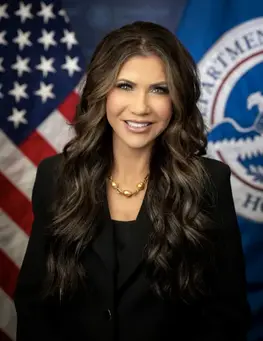
Kristi Noem
The survey, which canvassed the opinions of 500 registered voters, revealed that 59% disapproved of Noem’s performance during her tenure. The margin of error for the poll was plus-or-minus 4.5%, a statistically significant indicator highlighting the discontent regarding her leadership style and controversial decisions. Notably, Noem faced criticism over her handling of protests against Immigration and Customs Enforcement (ICE) operations, during which two Minnesotans tragically lost their lives. Further scrutiny was directed at the awarding of DHS contracts to individuals with connections to her and her senior aide, Corey Lewandowski.
Noem’s political viability had been waning even prior to her appointment at DHS, partly due to revelations from her 2024 memoir where she recounted a controversial incident involving the shooting of her dog, claiming it was “untrainable.” Brad Coker, the founder of Mason-Dixon Polling and Strategy, remarked, “I think she was already starting to slip. Trump gave her a lifeline, and she wasn’t able to hold on to the lifeline. Republicans have dogs too. It wasn’t something that just offended the left.”
Julia Hellwege, director of the Chiesman Center and USD associate professor in political science, was unsurprised by the poll results. “This is somewhat expected in the aftermath of her termination, which was praised by both liberal opponents and of course, Trump supporters who would back his decision,” Hellwege commented on the political climate within the state. This sentiment suggests Noem’s fall from favor transcends traditional party allegiances.
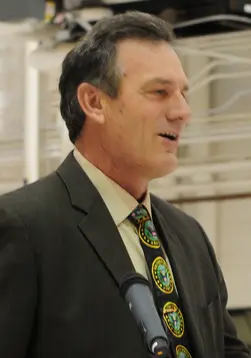
Larry Rhoden
Meanwhile, the political pendulum in South Dakota appears to steady itself as Republican Governor Larry Rhoden, who succeeded Noem, garners a 53% job approval rating from the same poll participants. Rhoden, originally from Union Center, has been active in promoting successful legislative sessions, which have won him favor among the electorate. “Rhoden’s job approval rating is still pretty good for a guy who more or less inherited the job,” Coker told South Dakota News Watch, alluding to Rhoden’s capabilities in navigating his newfound leadership role.
U.S. Senator Mike Rounds, noted for his tenure as Governor of South Dakota from 2003 to 2011, managed to secure a 55% approval rating. Behind his commendable political track record, Rounds leads his GOP primary challenger, Justin McNeal of Rapid City. Rounds has been associated with pragmatic policies that resonate with the conservative values prevalent in the state.
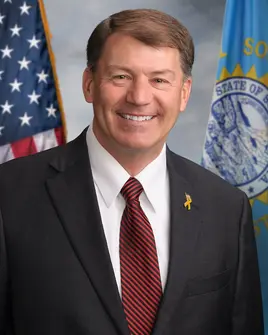
Mike Rounds
For U.S. Senate Majority Leader John Thune, an iconic figure within South Dakota’s political framework, the polling narrative tells a different story. With a 49% approval rating and a notable 47% disapproval rate as leader of the Republican Senate, Thune’s situation draws comparisons to the “Daschle effect,” where national political prominence began overshadowing local commitments. Thune’s lower approval ratings could indicate a shift in voter sentiment, potentially challenging the paradigm of longstanding political loyalty.
Poll analyses unearthed a clear demographic divide. Approval ratings for Rhoden, Rounds, and Thune vary significantly across age and gender. Older South Dakotans, particularly those aged 65 and above, showed higher levels of approval for the officials compared to their younger counterparts. Marked gender differences were also observed, with women generally being less approving than men regarding the state’s elected representatives. These findings highlight ongoing generational and gender-based political dynamics within South Dakota, reflecting broader trends across the nation.
As South Dakota continues to navigate its political journey, the state remains emblematic of the American ethos of diverse perspectives and evolving leadership. Whether addressing local issues or national reputations, South Dakota’s political landscape will persistently influence and be influenced by wider national currents.
For further information or to join the political discourse, you can reach Alexander Rifaat, Politics and Statehouse Reporter at South Dakota News Watch.