
The proposal to repeal Medicaid expansion in South Dakota’s legislature took a significant step forward, stirring a fresh debate across the state as residents and lawmakers grapple with the future of healthcare funding. This move comes on the heels of an expansion approved by voters in late 2022, which was meant to extend health coverage to over 27,000 low-income residents. However, as budget constraints tighten, the question of continuing this expansion looms large.

Larry Rhoden
Republican Representative Aaron Aylward, spearheading the repeal bill, stated to South Dakota Public Broadcasting that “when looking at the appropriations and funding, Medicaid is overall the state’s biggest spender.” Indeed, Medicaid represents a substantial allocation in South Dakota’s $1.8 billion medical services budget, with $39 million earmarked just for the expansion.
Tim Rave, president of the South Dakota Association of Healthcare Organizations, underscored the critical nature of this funding at a recent committee meeting. He detailed how essential Medicaid expansion is in providing health coverage, particularly in a rural state where access to affordable healthcare remains a pressing issue.
The historical significance of South Dakota, with its lush landscapes and iconic landmarks such as Mount Rushmore and the Badlands, is often contrasted by its contemporary challenges. The state’s economy heavily leans on sectors like agriculture and tourism, yet healthcare forms a backbone that supports its diverse population.
Governor Larry Rhoden, who recently proposed a budget with no spending increases for K-12 education, state employees, or healthcare providers, finds himself at the heart of this discourse. In his address, Governor Rhoden emphasized fiscal prudence given current economic constraints.

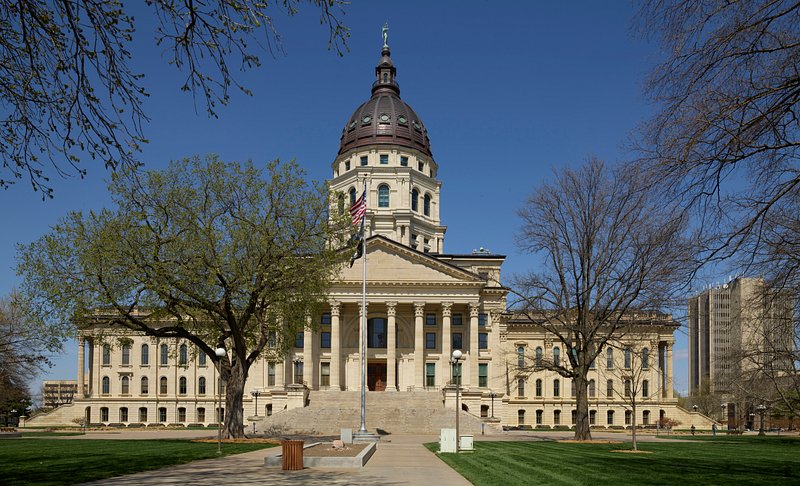
The South Dakota State Capitol Building
As the bill progresses to the South Dakota House floor following an 8 to 4 committee vote, constituents are actively being consulted. Communities are being asked whether Medicaid expansion should remain a priority in the state’s budget amidst competing financial demands.
South Dakota’s cultural and economic fabric is deeply woven with the threads of its indigenous populations, pioneering spirit, and close-knit communities. While Medicaid expansion might be seen as a fiscal strain by some legislators, it is crucial to recognize its role in safeguarding public health access in a predominantly rural state. Many citizens, particularly in less urbanized areas, see this as vital for their wellbeing and economic stability.
The debate over Medicaid is emblematic of a broader conversation happening nationwide as states weigh the costs and benefits of extending healthcare to underserved populations. With a decision pending, South Dakotans are navigating the complex interplay between fiscal responsibility and social welfare, marking a pivotal moment in the state’s legislative history.
The outcome in South Dakota may set a precedent for future healthcare legislation across the American Midwest, where rural health initiatives remain as critical as ever. The state’s decision will most certainly reverberate far beyond its borders, highlighting its role as a bellwether in rural healthcare policy.
As we await the legislature’s decision, the focus remains on ensuring that the voices of the people in South Dakota – those most affected by these policy changes – are heard and considered in shaping the future of their state’s healthcare system.