
In a notable stance aligning with national interests, South Dakota officials are rallying behind the decisive actions of President Donald Trump’s administration in the dramatic capture of Venezuelan President Nicolás Maduro. This move has stirred a variety of reactions across the state, shedding light on its implications for both local political dynamics and broader international relations.
South Dakota, a state that prides itself on its robust political discourse and civic engagement, finds itself at the crossroads of a significant geopolitical event. The operation leading to Maduro’s capture has been described as a reflection of the global struggle against narco-terrorism and authoritarianism, values that resonate deeply with many of the state’s leaders and citizens.
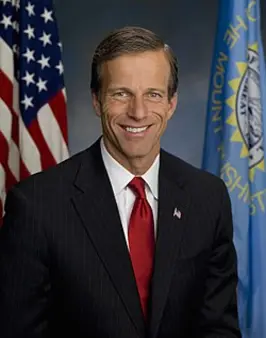
U.S. Senator John Thune, a prominent figure in South Dakota’s political landscape, has been vocal about his support for the capture. In what he described as “an important first step to bring [Maduro] to justice,” Thune underscored the necessity of American leadership in enforcing global justice. “President Trump’s decisive action to disrupt the unacceptable status quo… through the execution of a valid Department of Justice warrant, is commendable,” he stated.
The capture presents an opportunity for South Dakota to assert its stance in national security matters, with Thune expecting the Senate to be briefed on the operation’s complexities. His statement resonates with the resolve to tackle issues that threaten the safety and integrity of the United States and its allies.
South Dakota’s interest in international politics is further endorsed by U.S. Senator Mike Rounds, whose remarks highlighted the broader implications of Maduro’s capture. Rounds addressed the pervasive threat of narco-terrorism, commenting on the thousands of American lives claimed over the years by drug flows allegedly facilitated by Venezuela under Maduro’s regime. “President Trump has sent a message to the world,” Rounds emphasized, “that if you harm the United States of America, you will face the consequences.”
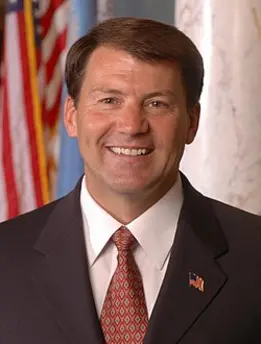
Such declarations are crucial in positioning South Dakota as a proactive participant in global issues, reflecting a steadfast commitment to ensuring national and international stability. The support from the state’s top officials underlines South Dakota’s dedication to addressing the challenges posed by drug trafficking and authoritarian governance.
Furthermore, Dusty Johnson, South Dakota’s sole representative in the House, echoes the sentiment, eagerly awaiting further briefings on the operation. Johnson’s focus is explicitly on understanding the next steps and evaluating efforts to end the drug flows into the U.S., which align closely with South Dakota’s interests in maintaining public health and safety.
Governor Larry Rhoden and Attorney General Marty Jackley have also expressed approval of the operation, viewing the capture as a pivotal moment in the ongoing battle against narco-terrorism. Jackley labeled the initiative as “a significant step” in countering the drug-related threats that Venezuela has posed over recent years.
However, the move has not been without controversy. The South Dakota Democratic Party has voiced concerns, alleging that the actions could spiral into a conflict over Venezuela’s oil resources. The party has pointed out the dangers of bypassing Congressional consultation, raising constitutional questions over the President’s unilateral decision-making. These reservations remind us of the importance of democratic processes and legal frameworks in maintaining ethical standards in international actions.
Such multifaceted perspectives offer a glimpse into South Dakota’s diverse political landscape, demonstrating the state’s engagement with complex national and global issues. As the situation unfolds, it will be critical for the state’s leaders to balance national security concerns with ethical considerations and legal obligations, a task that South Dakota’s engaged public will undoubtedly continue to scrutinize.
Amidst the ongoing debate, the underlying significance of South Dakota’s response lies in the state’s commitment to justice and the rule of law, reinforcing its reputation as a key player in American politics with a forward-looking approach to international engagement.