
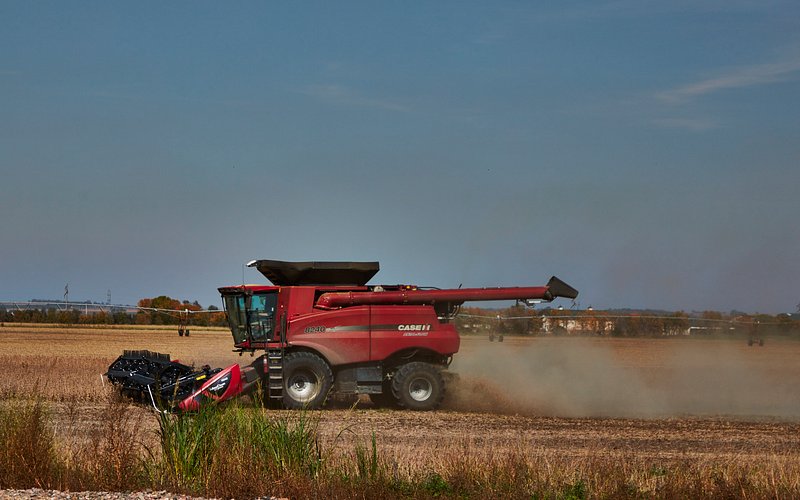
In the heartland of America, where the golden fields of soybeans stretch across the vast plains, South Dakota stands at the forefront of an economic whirlwind, intricately tied to international trade dynamics. For soybean farmers like Kevin Deinert, the landscape has dramatically shifted with grain bins filled with unsold soybeans, a stark change from the prosperous trade partnerships once flourishing with China.
Since President Trump initiated a trade war, imposing tariffs on Chinese exports, China has turned to Brazil and other countries for their soybean needs. This geopolitical game of chess leaves many farmers across South Dakota grappling with uncertainty, caught in the crosscurrents of global trade policies and rising input costs.
Inside South Dakota, agriculture holds the reins of the economy, and soybeans are a crucial player in this arena. The state has long relied on international markets for sustainability and growth, navigating through economic tides with the dexterity of a seasoned farmer. Here, the ethos of the state revolves around resilience and innovation, driving these communities to adapt and thrive amidst challenges.
Kevin Deinert, a South Dakota soybean farmer, reflects this resilience, even as he grapples with grain bins overflowing with unsold produce. “I stored everything I could, so it’s full, as you can see,” Deinert remarks. “A little too full.” For Deinert and many others, the past few years meant consistently emptying these bins by selling to China. But now, as prices for fertilizers rise due to inflation and increased tariffs on imports from countries like Canada, the path to profitability seems fraught with obstacles.
Far from being an isolated tale, Deinert’s situation echoes across the fields of South Dakota. The U.S. agricultural landscape has been rocked, leaving a collective feeling of uncertainty among farmers. While the $12 billion assistance package announced by President Trump offers some relief, many argue it’s not enough to restore financial health. Even traditionally conservative groups like the Farm Bureau Federation recognize the depth of the issue, calling for more strategic trade initiatives.
Doug Sombke, president of the South Dakota Farmers Union, succinctly captures the sentiment shared by many farmers: “He’s back at the fire and he’s trying to put it out with a garden hose,” concerning the administration’s response. “And it’s an inferno.” Agricultural lobbying groups nationwide echo these thoughts, pointing out the loss of longstanding trade relationships and the rising costs of essential farming inputs.

Kevin Deinert
This landscape of uncertainty influences more than just the economy; it ripples into the political realm, especially with the upcoming midterm elections. As a state traditionally backing the Republican majority, South Dakota’s economic health is pivotal in shaping political outcomes, not just locally but nationally. Sen. John Thune and others keep a close eye on these developments, aware of the significant impact these agricultural policies may have.
While a new trade deal promises that China will purchase 12 million metric tons of American soybeans by February and 25 million metric tons over three years, farmers like Deinert remain skeptical. “Right now, we’re just trading on headlines,” Deinert admits. This sentiment highlights the need for concrete actions beyond temporary aid.
John Kippley, another seasoned farmer from Aberdeen, South Dakota, who also owns a tax preparation company, expresses wider concerns about the unpredictable trade environment. “Banks are really nervous right now because they don’t know what’s going to happen,” Kippley says, echoing the uncertainty felt by many in the agricultural community. “Is he [Trump] going to put more tariffs on? Or is he going to les up on the tariffs? It just feels like the foreign countries don’t like us anymore.”

Doug Sombke
As South Dakota farmers navigate these turbulent waters, they demonstrate the resilience that defines this heartland state. With spring approaching, the timing of the $12 billion aid package remains critical. Payments from the aid package are anticipated to arrive by late February, providing some relief as farmers plan for the next planting season.
Despite the challenges, there’s a shared hope among South Dakota’s farming communities for a return to stable and thriving international trade relationships. Kevin Deinert, who also serves as the president of the South Dakota Soybean Growers Association, emphasizes a collective preference for trade over aid. “You know, as farmers we want trade, not aid,” he says, capturing the sentiment of many.
As South Dakota farmers await a more stable trade future, the state’s commitment to agriculture and the resilience of its farmers continue to inspire confidence. These communities are not just vital to their local economies but are central to the nation’s agricultural prosperity. In the dance of global trade, South Dakota remains a key player, ready to reclaim its footing on the world’s stage.
The overarching narrative finds the state of South Dakota and its farmers at a critical juncture, embodying resilience and adaptability in the face of an evolving global trade environment. As the midterm elections approach, the farm economy’s state will undoubtedly play a significant role in shaping the political landscape, both in South Dakota and beyond. The eyes of the nation and the world watch as South Dakota’s farmers continue their pivotal role in the agricultural narrative.